



- Key Highlights
- What a Steel Frame Barndominium Shell Actually Includes
- Common Sizes and Layout Configurations for Metal Barndominiums
- What Does a Steel Frame Barndominium Cost?
- Steel Frame vs. Wood Frame: The Honest Tradeoffs
- What Your Site Needs Before Installation Day
- Financing and Rent-to-Own for Steel Barndominiums


A landowner in Tennessee ordered a 40x60 steel frame barndominium last year. Shell was delivered and installed in about three weeks. The total project, from ground break through interior rough-in, ran closer to seven months.
That gap between shell timeline and total project timeline is where buyers most often get surprised. The steel structure is the fast part. Site prep, the concrete slab, permits, and interior finishing are where the calendar stretches, and where the budget adds up beyond the shell quote.
We build and install steel barndominium shells across the country. What follows covers how they're sized, what they cost, how steel compares to wood frame construction, and what your site needs before your building arrives.
Key Highlights
- A steel frame barndominium from us is the complete exterior shell: framing, roof, wall panels, and any doors and windows you spec into your order. Interior finishing is a separate project on your end.
- Common footprints run from 30x50 to 60x80. Most buyers land between 40x60 and 50x80 for a combined shop-and-living build.
- We engineer-certify our steel shells to meet local wind and snow load requirements across most U.S. states.
- Shell cost varies by size, roof style, certification, and add-ons. Foundation, site prep, permits, and interior work are separate budget items.
- Financing and rent-to-own options are available for qualified buyers.
- Call (208) 572-1441 to price out your build, or design your barndominium shell at EngineeredMetalBuildings.com.
What a steel frame barndominium shell actually includes
The shell is the structure, not the finished home
When you order a steel frame barndominium from us, you're ordering the exterior structure. That's the steel framing, metal wall panels, roof system, and any openings you specify, including roll-up doors, walk doors, and windows. We deliver it and install it on your prepared site.
Interior finishing is a separate project. Electrical, plumbing, insulation, interior wall framing, drywall, and flooring all happen after the shell is standing and closed in. Most buyers hire that work out to a contractor. Some do it in phases over a year or two. The sequence matters: shell first, everything else after.
Shell pricing versus total project cost
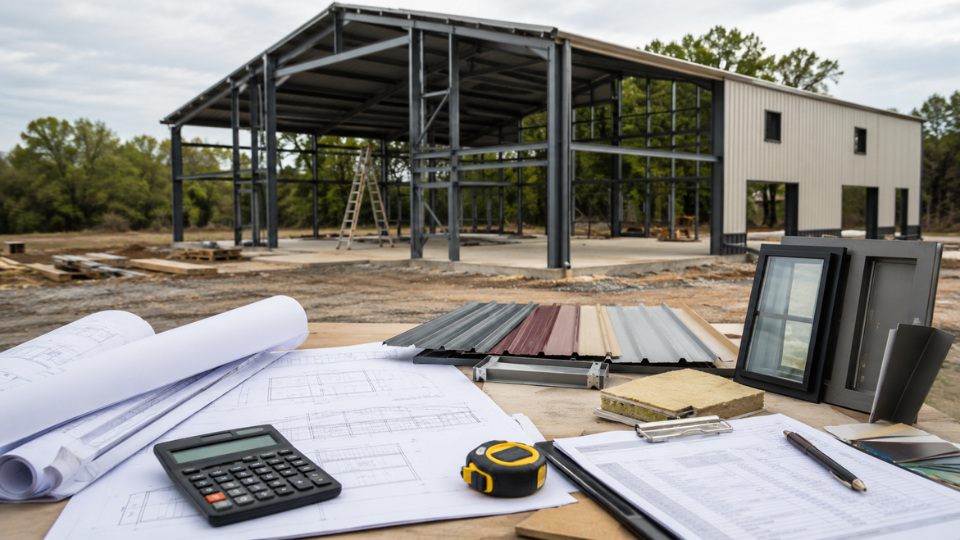
The shell quote and the total project budget are two different numbers. Buyers who treat them as the same number run into problems.
Your full project budget includes the shell, site grading, a concrete slab or other foundation, permit fees, engineering drawings if your county requires them, and interior finishing costs. Some of those line items are hard to estimate without knowing your county and your specific site. But understanding that they exist as separate budget categories is the most practical thing to have straight before you start pricing.
Common sizes and layout configurations for metal barndominiums
Shop-forward layouts
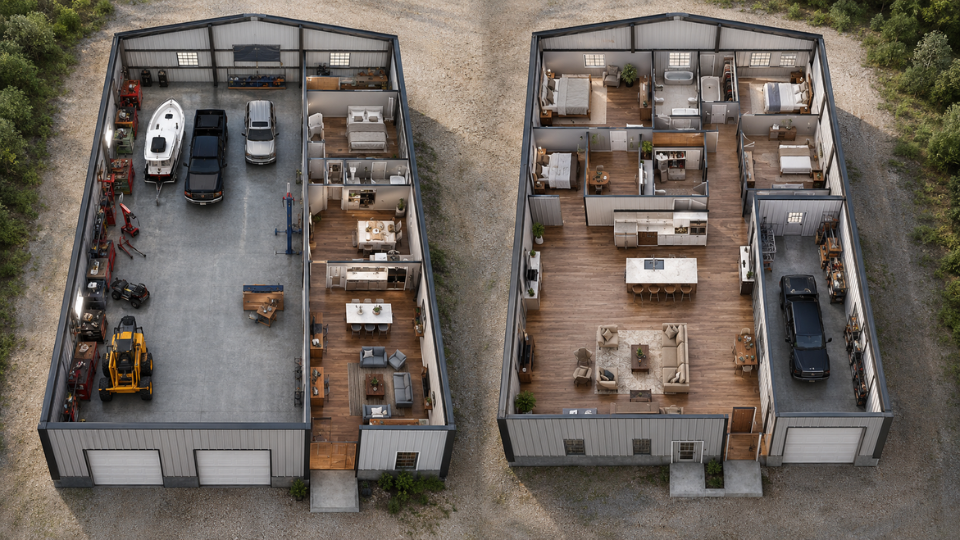
Shop-forward barndominiums put most of the square footage into the work area and keep the living section compact. A 40x60 building with a 40x40 shop and a 40x20 living area is a common starting point for landowners whose primary need is workspace, with on-site sleeping quarters as a convenience.
Farmers, ranchers, and contractors tend to go this route. You get a genuinely oversized shop for how you actually use it and keep the residential side functional without driving up the total build cost.
Living-forward layouts
Living-forward setups flip the ratio. A 50x80 with a 50x60 residential section and a 50x20 shop or utility bay works well for buyers who want a full-size home with a serious attached workspace. More square footage goes to the living side, and the shop is sized for a realistic personal use rather than a full commercial operation.
Neither configuration is objectively better. It depends on what you're actually building the structure for. Call (208) 572-1441 and walk us through your use case. We can size the footprint around what your property and your plans need, not a generic default.
What does a steel frame barndominium cost?
There's no fixed price we can publish here that means anything. Steel pricing shifts with the market, and certification requirements vary enough by region that a per-square-foot estimate without knowing your state and county is a rough guess at best. Call (208) 572-1441 for a current quote on your specific size and location.
What we can tell you is what drives the number up or down.
The biggest cost drivers
Size is the clearest factor. Larger footprints cost more because there's more material, more framing, and more roof. A 60x80 shell runs noticeably higher than a 40x60.
Roof style is the next significant variable. Vertical roof panels are the right choice for most applications, particularly in areas with real snow or significant rainfall. They handle weather better than regular-style or horizontal panels over the long run. They also add to the base price. If you're in a high-snow or high-wind area, the vertical roof isn't optional. It's what the building needs.
Engineer certification is a line item most buyers need. If your county requires stamped engineering drawings for a building with residential occupancy, those drawings cost money. Counties vary significantly. Some rural parcels have almost no oversight. Others have full residential permit processes. Knowing your county's requirements before you order saves time and budget surprises. Our post on how building codes and snow loads affect cost covers this in more detail.
What the shell price doesn't cover
Your shell quote covers the structure. The rest of your project budget still needs to account for:
- Site preparation: grading, leveling, and drainage
- Foundation: usually a poured concrete slab, sized and reinforced for your building footprint and local soil conditions
- Permit fees and plan review, which vary by county and occupancy classification
- Interior finishing: insulation, rough-in electrical and plumbing, drywall, and flooring
None of that is a hidden cost. It's just not in the shell quote. Buyers who budget only the shell price and skip these line items run into problems at every stage after the building goes up.
Steel frame vs. wood frame: the honest tradeoffs
Wood-frame barndominiums exist and some people prefer them for interior finish flexibility. Here's how the two construction methods compare on the factors that matter to most buyers:
| Factor | Steel frame | Wood frame |
|---|---|---|
| Fire resistance | Steel framing won't burn | Wood framing is combustible |
| Pest resistance | No termites, no rot | Requires treatment and ongoing monitoring |
| Lifespan | 40+ years with standard upkeep | 25–40 years; varies heavily by climate and maintenance |
| Engineer certification | Available for local wind and snow codes | Custom engineering possible, but adds cost for non-standard designs |
| Build speed (shell) | Delivered and installed in weeks | Framing and sheathing takes weeks to months |
| Material cost predictability | Priced at order; no lumber fluctuations mid-build | Lumber prices can shift during the build |
| Long-term maintenance | Low; occasional panel touch-up | Periodic rot treatment, pest control, repainting |
| Foundation requirement | Concrete slab or gravel pad depending on site and use | Usually requires a poured foundation |
Steel wins on durability and long-term maintenance costs. A shop that's doing real work, storing equipment, running power tools, housing livestock in an adjacent bay, takes on a lot of wear over decades. Steel handles that better than wood in most climates, and it's substantially better in termite-heavy states like Alabama, Georgia, and Florida.
What your site needs before installation day
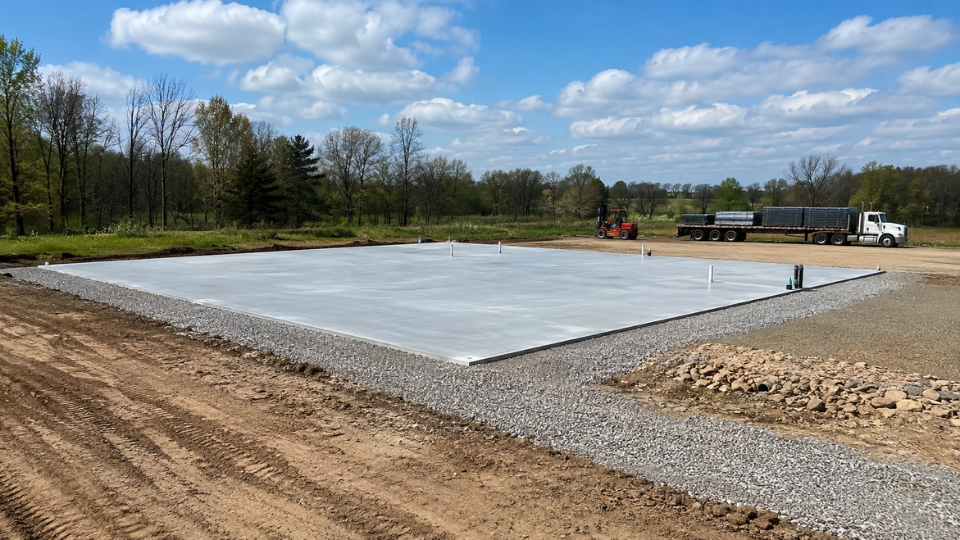
Your land needs to be graded and level before we arrive. The building pad should be clear and accessible by delivery equipment. On rural properties, this matters more than people expect. A soft gravel drive that handles a pickup truck can create real problems for a flatbed and a forklift, especially after rain.
If you're doing a concrete slab, it should be fully cured before we schedule installation. We won't install on fresh concrete. Get the pour done early, let it cure completely, and have the pad ready before you call to lock in your install date.
Our site preparation guide covers exactly what the crew needs when they show up. Read it early in your planning process, not the week before delivery.
Financing and rent-to-own for steel barndominiums
If paying for the shell upfront is the hold-up, we have options. Financing is available through Acorn Finance. Rent-to-own lets you get your building on the ground with monthly payments instead of the full purchase price at signing.
Call (208) 572-1441 and we can walk through what payment structures are available and what the qualification process looks like. Financing details are also available on the financing page.
A steel frame barndominium is a practical, durable option for landowners who want combined shop-and-living space built to handle real use over decades. The shell is the fast, predictable part of the project. Site prep, the slab, permits, and interior finishing take more time and more planning.
If you have a general sense of your footprint and your layout, the fastest next step is to design it at EngineeredMetalBuildings.com or call (208) 572-1441. We'll work through the options, quote your shell, and walk you through what the site needs before your build date.
Similar Building Models


- Key Highlights
- What a Steel Frame Barndominium Shell Actually Includes
- Common Sizes and Layout Configurations for Metal Barndominiums
- What Does a Steel Frame Barndominium Cost?
- Steel Frame vs. Wood Frame: The Honest Tradeoffs
- What Your Site Needs Before Installation Day
- Financing and Rent-to-Own for Steel Barndominiums


Frequently Asked Questions
For the shell itself, steel barndominiums typically come in below stick-built costs when you factor in framing labor and current material prices. Total project cost depends on how much you finish the interior, local permit requirements, and your foundation situation. Over the building's life, 14-gauge steel also carries lower maintenance costs than wood framing, which affects the long-term comparison in steel's favor.
Installation typically takes one to a few days on-site for most standard shell sizes once the crew and equipment arrive. Lead time from order to delivery varies by demand and your region. Four to eight weeks is a typical range for current orders, though this can shift. We'll give you a specific timeline when you place your order.
Yes. You specify the size, location, and quantity of roll-up doors, walk doors, and windows when you configure your order. Openings can be placed where your floor plan needs them. Use the 3D design tool at EngineeredMetalBuildings.com to set up your layout, or call us at (208) 572-1441 and we'll walk through the configuration with you.
Most counties that require permits for residential-use structures also require stamped engineering drawings. Whether you need them depends on your county and how the building gets classified. We offer engineer-certified designs for local wind and snow loads. Check with your local building department before ordering to confirm what's required on your parcel.
Most buyers ordering a combined shop-and-living structure land between 40x60 and 50x80. The right size depends on how much square footage the shop side needs versus the living side, and on how much usable land you're working with. We can customize length and width to your specific site.
The shell includes the complete steel structure: framing, metal wall panels, roof panels, trim, and the doors and windows you specify when you order. Site delivery and installation are included. Interior work, the foundation, and site prep are not part of the shell price.


