
Two Car Garages.
The size most homeowners choose — two vehicles side by side, or one vehicle plus a real workspace. Our best value.
From $9,045*
- Engineer-certified to local code
- 20-year warranty
- Free delivery & installation
- Width range
- 20′ – 30′
- Wall height
- 8′ – 15′
- Holds
- 2 vehicles
- Best width
- 24′
Why this size
The most popular size
The size most homeowners land on — the best balance of room and value.
Two vehicles, doors open free
Go 24 ft wide and both vehicles fit with room to open every door and walk between.
Parking plus a workspace
Use one bay for the daily driver, the other for a bench, tools, or a project.
Double door or two bays
Choose one wide opening or two single roll-ups — configured to how you'll use it.
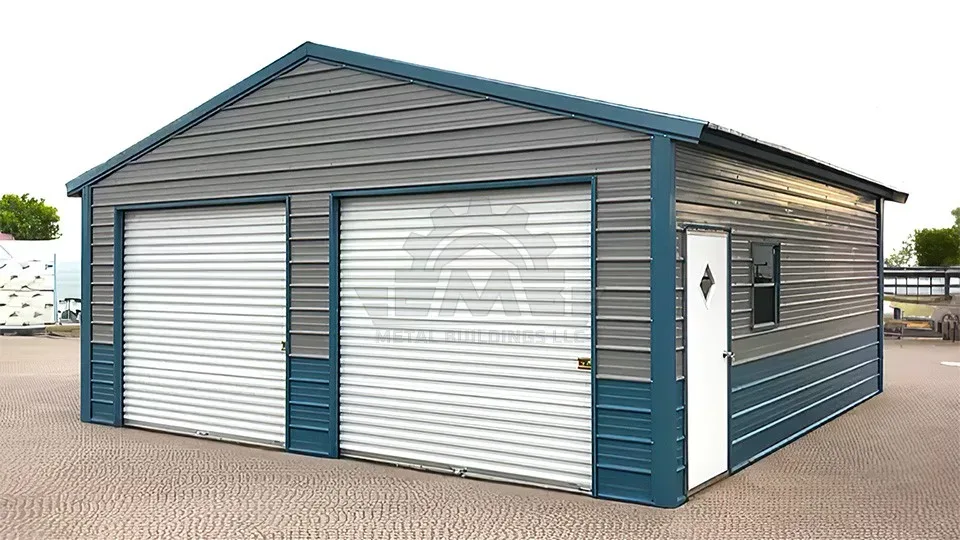
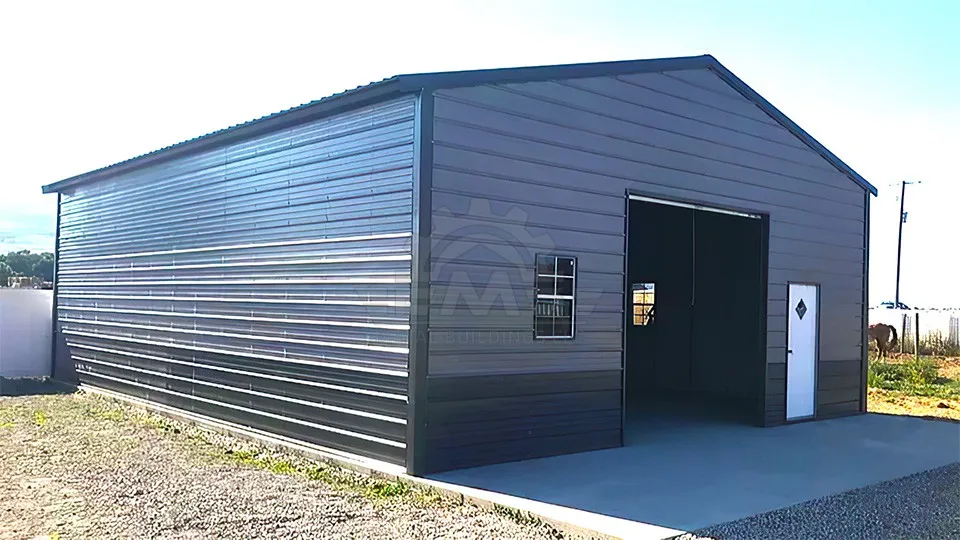
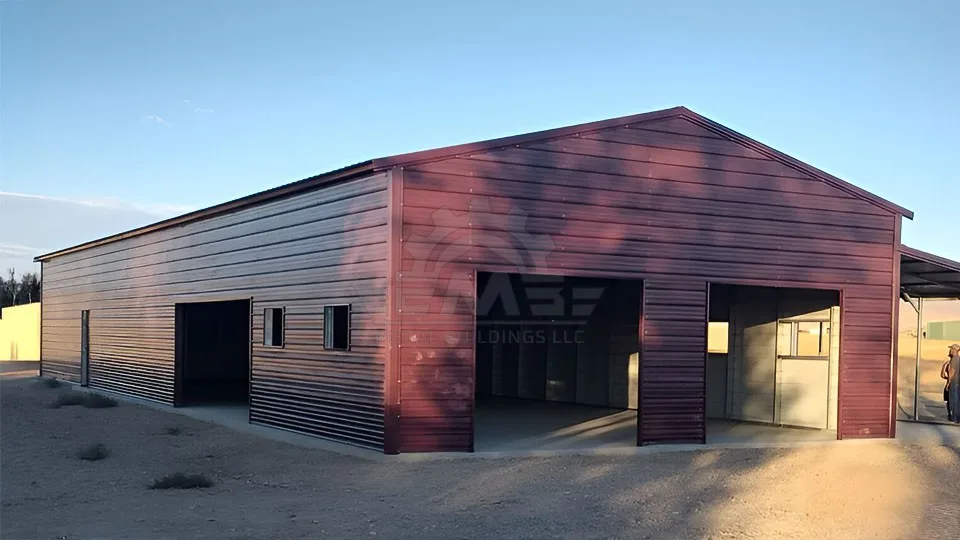
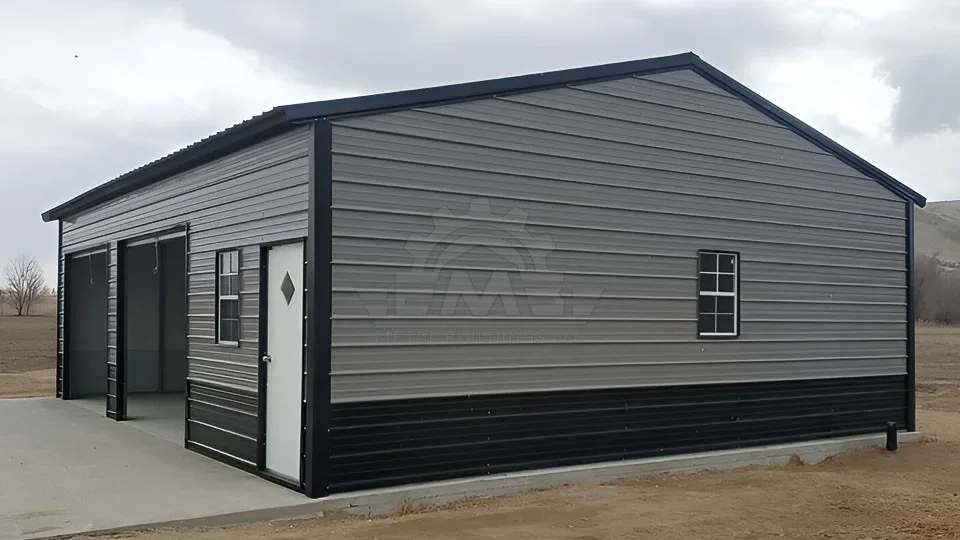
Popular two-car garage dimensions
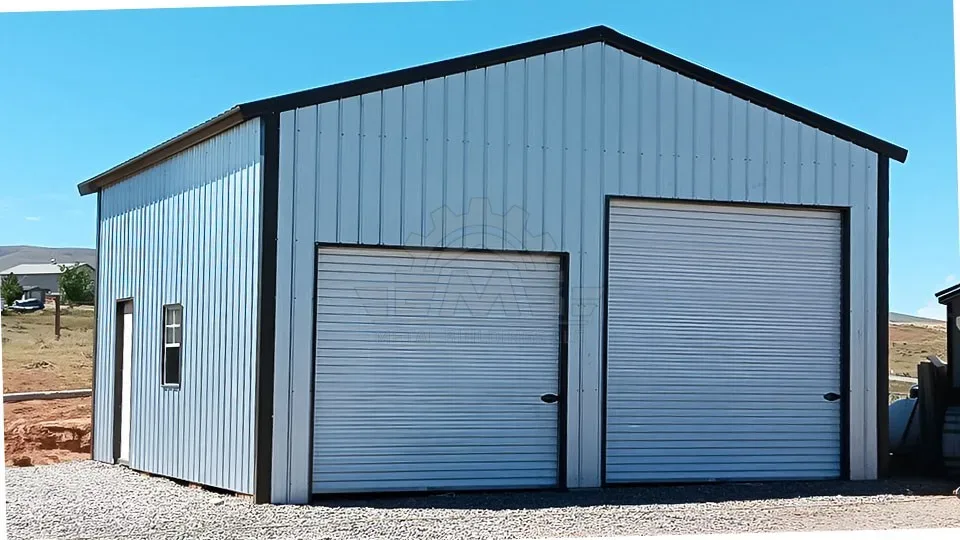
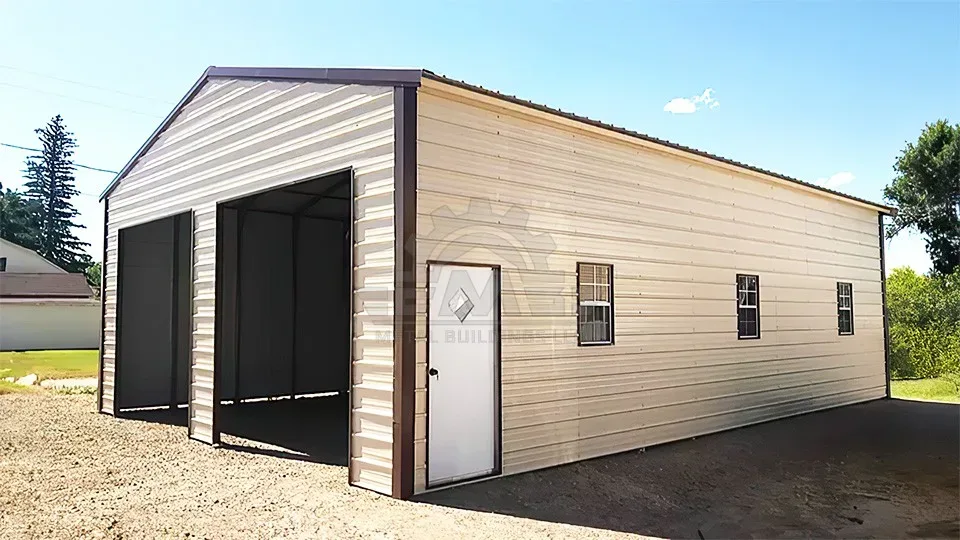
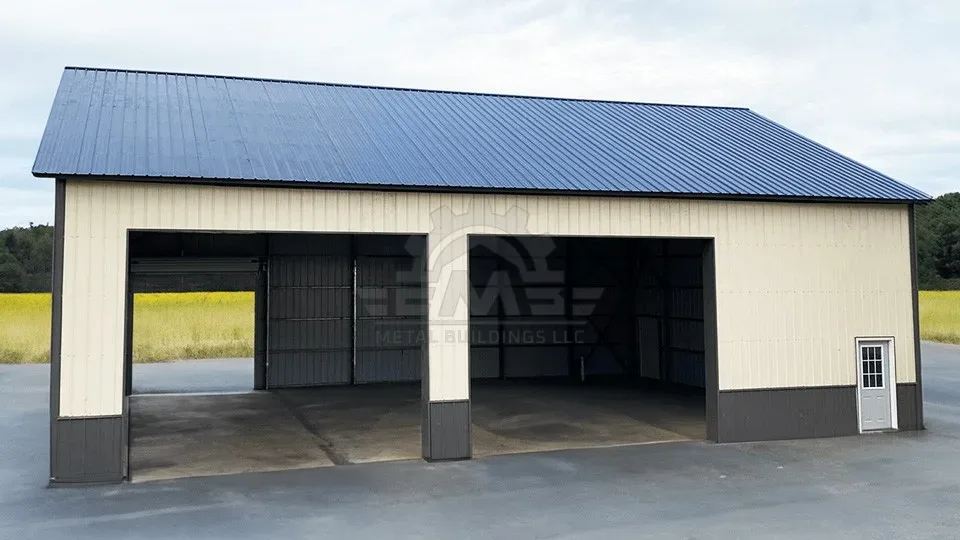
Real EMB builds across the sizes buyers choose most. Pricing is a starting point — call for an exact quote.
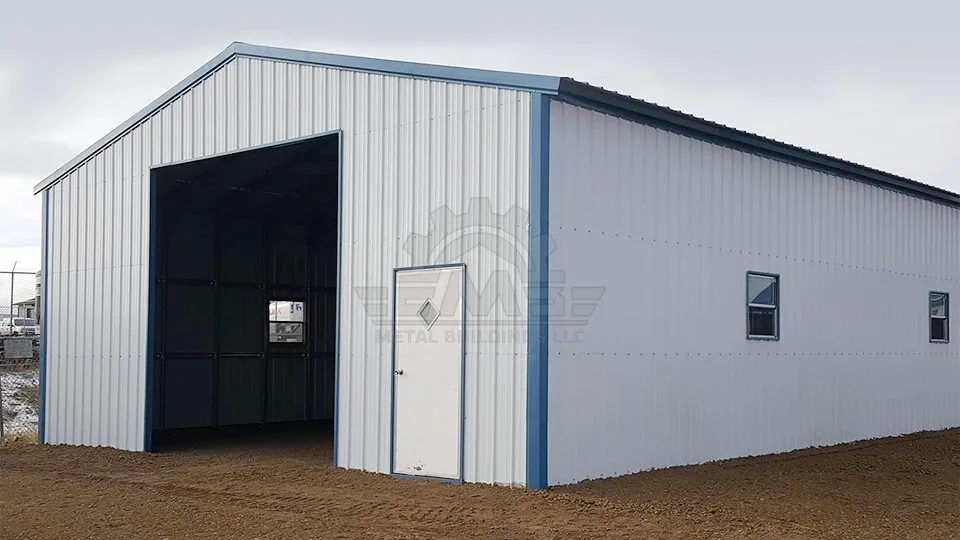
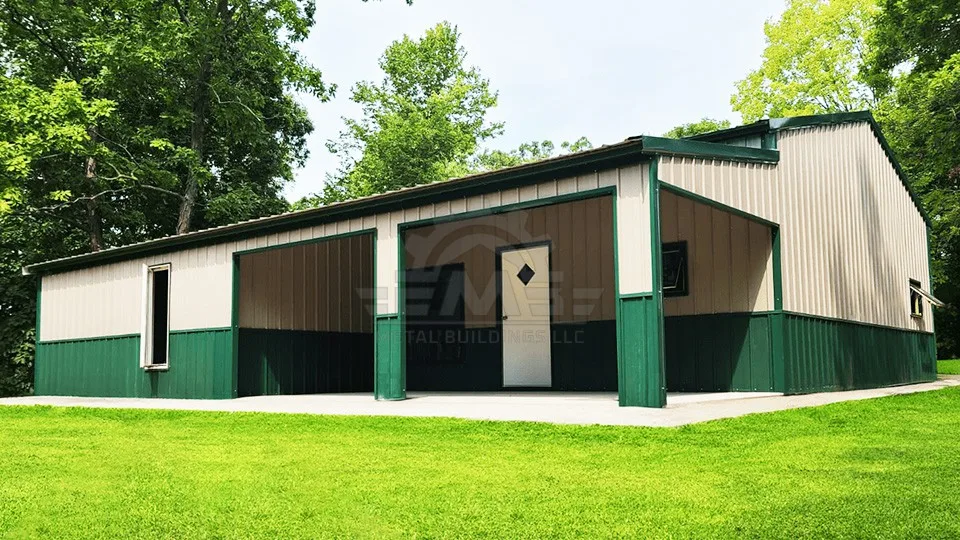
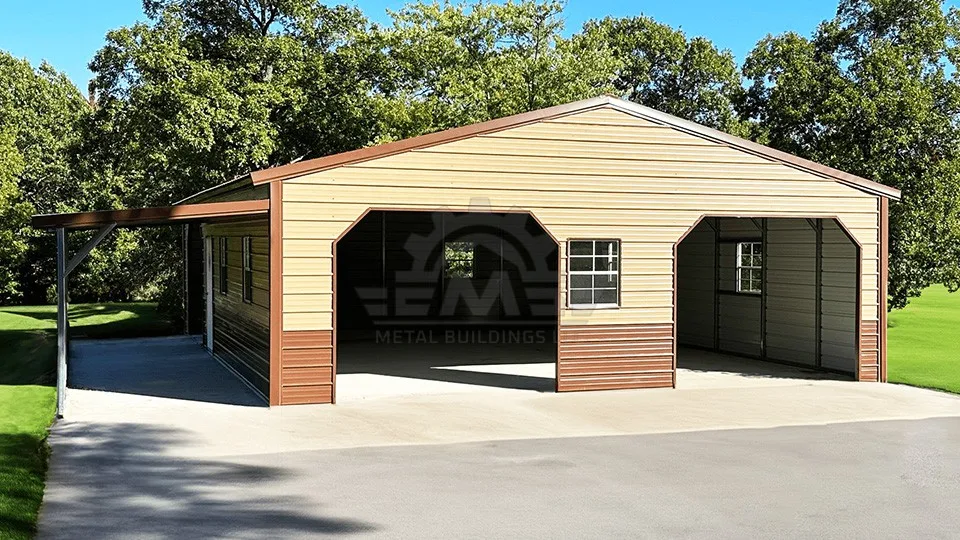
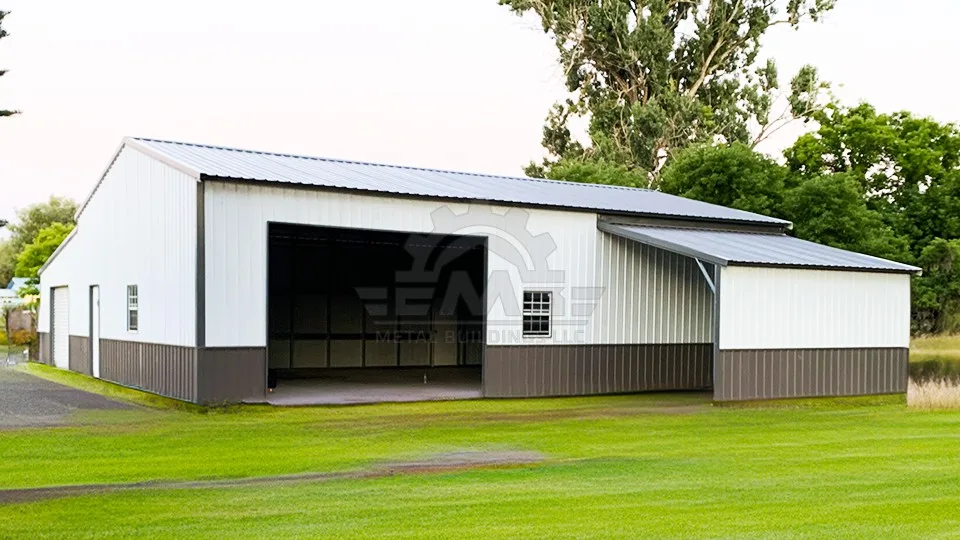
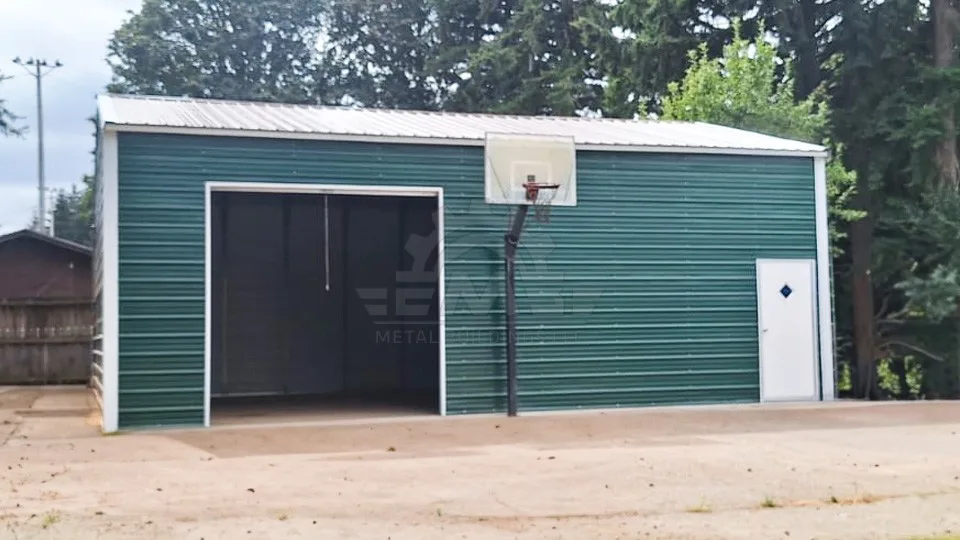
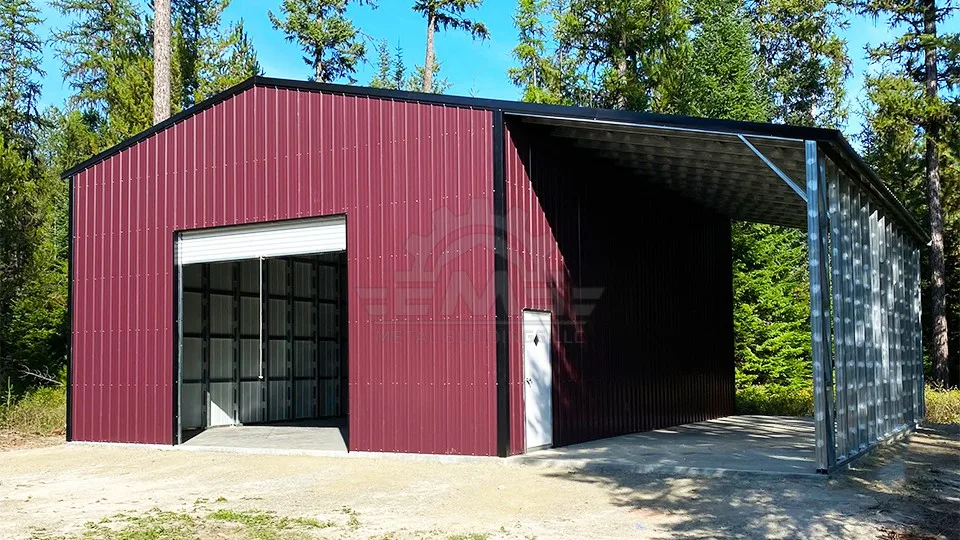
Two-car garage sizes & starting prices
A two-car garage runs roughly 20 to 30 feet wide. The jump from 20 to 24 feet is the one worth making — it's the difference between doors that open tight and a building you actually enjoy using.
| Size | Starting price* | Best for |
|---|---|---|
20′×20′ | $9,000 – $11,900 | Two compact vehicles, doors open tight |
22′×25′ | $9,800 – $12,100 | Two vehicles with a little breathing room |
24′×25′ | $10,300 – $12,000 | The comfortable, most-recommended two-car |
24′×30′ | $14,500 – $16,000 | Two vehicles plus a workbench or storage bay |
30′×40′ | $23,000 – $24,500 | Two bays up front, an open shop in back |
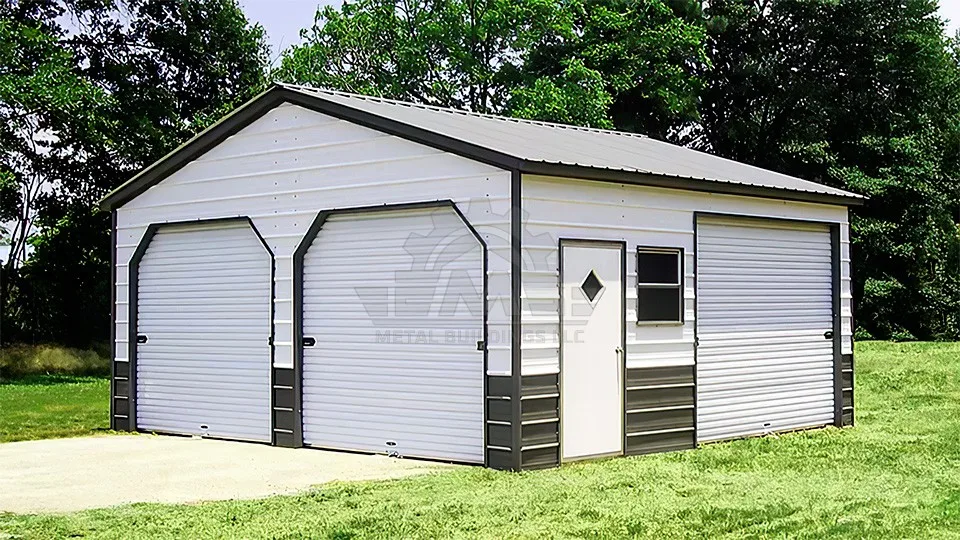
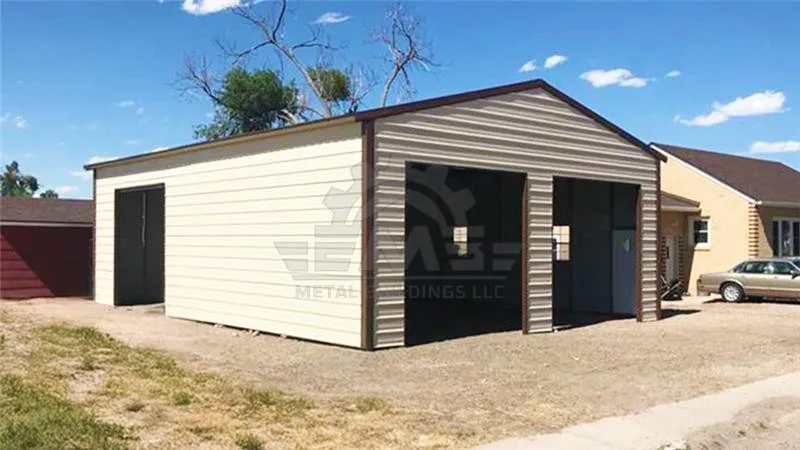
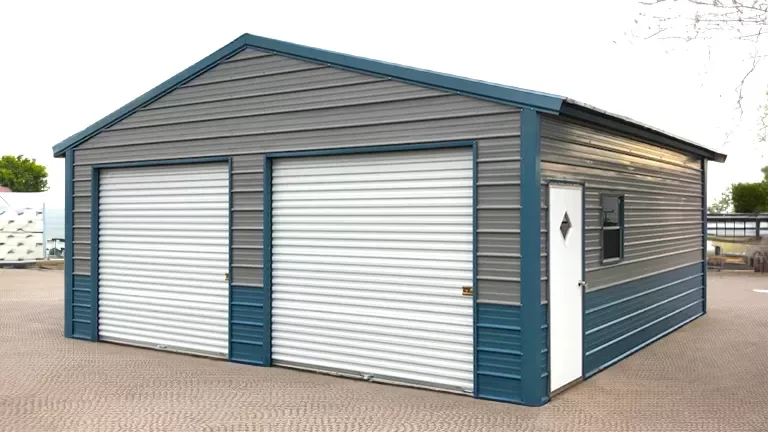
*Illustrative starting prices — final pricing depends on roof style, gauge, doors, windows, and your local codes.
Choose the right roof and steel
Three roof styles, two framing gauges, two panel gauges — the choices that decide how your garage looks, holds up, and prices out.
Regular Roof
Rounded corners and horizontal panels make this the most economical roof we build. It goes up fast and holds up well through everyday sun, rain, and light weather.
Best for tight budgets and mild climates.
A-Frame (Horizontal)
A boxed-eave, house-style roofline with horizontal panels. It looks more finished than a regular roof and adds strength for moderate wind and rain.
Best for a residential look in moderate weather.
Vertical Roof
Panels run from ridge to eave so rain and snow shed straight off instead of sitting on the seams. It's the strongest roof and the one we recommend for any longer building or real weather.
Best for snow, long buildings, and lasting protection.
Framing: 12 or 14-gauge
14-gauge is the standard; 12-gauge is a heavier upgrade recommended for high wind, heavy snow, and larger buildings.
Panels: 26 or 29-gauge
29-gauge steel is standard; 26-gauge is a thicker upgrade for extra durability and impact resistance.
How your two-car garage is built
The value is in the steel and the details. Here's what goes into an EMB two-car garage, and where the upgrades actually matter.
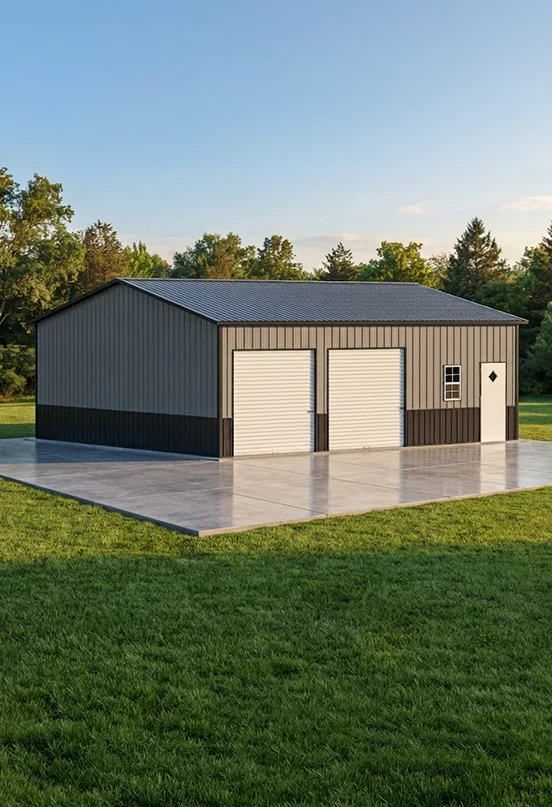
12 or 14-gauge framing
Fourteen-gauge is the standard; step up to 12-gauge for heavier snow and wind loads or a larger building. The heavier frame is the quiet workhorse that carries the weather.
26 or 29-gauge panels
Twenty-nine-gauge steel panels are standard; 26-gauge is a thicker upgrade for extra durability and impact resistance.
Braced on every leg
Legs are braced and anchored to your surface — rebar or ground anchors for dirt, asphalt anchors for blacktop, and concrete anchors for a slab — so the building meets local wind requirements.
Doors, windows & openings
Add roll-up doors (8×7 up to 10×10 and larger), 6-panel walk-in doors, and windows wherever you want them — configured to how each bay is used.
Engineered & certified
Every building is engineered and can be stamped for your specific wind and snow loads, which is often exactly what a permit office wants to see.
Delivered & installed
Free delivery and professional installation across 48 states, backed by a 20-year warranty — you prep a level pad, we build it on site.
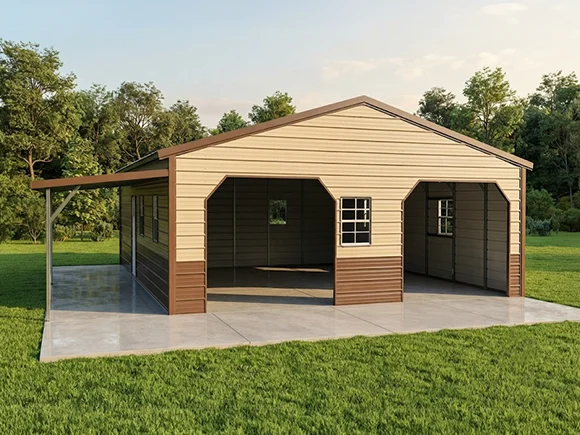
Why a prefab steel garage beats a build-it-yourself kit
A wood or DIY garage kit looks cheaper on the shelf, but the sticker rarely tells the whole story. By the time you've added concrete, lumber that keeps climbing in price, fasteners, roofing, paint, and the weekends of labor — or a contractor's bill — a stick-built two-car garage usually costs more than an engineered steel one that arrives ready and gets installed for you.
An EMB two-car garage is priced as a finished, installed building: American steel, engineered to your codes, delivered and professionally erected on your level pad — typically in a day or two — with free delivery and installation across 48 states. There's no rot, no termites, no repainting, and no wondering whether you cut the rafters right. You get a stronger building, faster, for a number you can see up front.
Two vehicles, or two plus a shop?
The right width depends on what shares the space. Talk it through with us and we'll size a two-car garage that actually fits your plans.
One, two, or three cars — how to choose
Not sure which size fits? Here's the honest trade-off — most people who hesitate between two sizes are happier a size up.
One Car
12′–24′ wide
One vehicle, a motorcycle, or a compact shop on the smallest footprint and lowest entry price.
Starting at
$6,805
View One Car garagesTwo Car
You're here20′–30′ wide
Two vehicles side by side, or one vehicle plus a real workspace. The most popular, best-value size.
Starting at
$9,045
You're viewing thisThree Car
24′–30′+ wide
Room for a fleet, a boat or RV, or a home business — the widest layouts and heaviest framing.
Starting at
$22,520
View Three Car garagesHow much does a two car garage cost?
Most two-car steel garages land in the range of roughly $11 to $20 per square foot depending on width, height, roof style, gauge, and the doors, windows, and insulation you add — plus your local wind and snow requirements. A 24-foot-wide build is the sweet spot for value and everyday usability. Pricing on our site is illustrative — design your exact building in 3D for live pricing, or call us for a firm quote.
Flexible ways to pay
- Rent-to-own and financing options available
- Free delivery and professional installation
- Live, transparent pricing in the 3D designer
Frequently asked questions
A standard two-car steel garage runs between 20 and 30 feet wide, most commonly 24 feet. Twenty feet parks two compact cars; 24 feet lets both vehicles fit with room to open every door and walk between them. Larger vehicles or extra storage are reasons to size up.
Two-car garages generally run about $11 to $20 per square foot, so pricing scales with size and how you build it — width, height, roof style, gauge, doors, windows, and insulation all factor in. Design yours in 3D for live pricing, or call us for an exact quote.
We recommend at least 24 feet wide. At 20 feet two vehicles fit but the doors open tight; 24 feet gives you room to open every door fully and walk between the vehicles — the single best upgrade you can make on a two-car.
Two single roll-up doors give each bay its own opening and let you use one side while the other is closed; a single wide door suits a boat, trailer, or a shop that needs one big opening. It comes down to how you'll use each bay — we'll help you choose.
Framing comes in 12 or 14-gauge and panels in 26 or 29-gauge. Fourteen-gauge framing and 29-gauge panels are the standard; upgrading to 12-gauge framing and 26-gauge panels adds strength and is recommended in high-wind or heavy-snow areas and for larger buildings.
Most areas require a permit for an enclosed garage — check with your local building department. A level concrete slab is the most common and recommended base for an enclosed two-car garage, though it can also anchor to asphalt or the ground.