



- TL; DR: Quick Takeaways
- Regular vs A-Frame vs Vertical Roof Style
- How Panel Orientation Affects Drainage & Maintenance
- What Are Three Metal Building Roof Styles?
- When to Choose Which Style?
- Cost, Maintenance, and Payback
- Our Final Word
- Roof Style Questions: Answered


The roof over your head is a deciding factor in your peace of mind and sense of security. Choosing the one that's not just sturdy, but actually fits you perfectly is one of the most critical decisions you'll make. It's about aesthetics, what you feel most comfortable and secure in, as well as performance, durability, and long-term value. The style and orientation of your roof panels directly impact how your building handles rain, snow, wind, and debris.
This guide will break down the differences between Regular, A-Frame Horizontal, and Vertical roof styles to help you make an informed choice that ensures better functionality and protects your investment for years to come.
TL; DR: Quick Takeaways
- Vertical Roof is the top performer for harsh weather (snow, heavy rain, high wind) and longer buildings, but it costs more.
- Regular Roof is the most budget-friendly option, best suited for mild climates and smaller structures.
- A-Frame Horizontal offers the classic house-like look at a lower cost than vertical, but shares the limitations of horizontal panels.
- Building length over 31 feet? Choose a Vertical roof to minimize leak-prone seams.
- Panel orientation matters: Vertical panels shed water and debris dramatically better than horizontal panels.
- Roof noise is solved by insulation, not the roof style itself.
Regular vs A-Frame vs Vertical Roof Style
| Aspect | Regular Roof (Rounded Horizontal) | A-Frame Horizontal (Boxed-Eave) | Vertical Roof |
|---|---|---|---|
| Description | Simple design with curved eaves; panels run horizontally. | Traditional "house-like" appearance; panels run horizontally. | Panels run from ridge to eave; requires a standing seam or batten cap. |
| Pros |
|
|
|
| Cons |
|
|
|
| Best Use Cases |
|
|
|
| Relative Cost | $ | $$ | $$$ |
How Panel Orientation Affects Drainage & Maintenance
The direction your roof panels run isn't just for looks- it fundamentally changes how your roof performs.
- Drainage: Vertical panels channel rain, snow, and pine needles off the roof. Whereas, Horizontal panels have laps where water jumps across, trapping leaves & debris, leading to stagnant pools and corrosion.
- Gutters: The straight, downward flow of a vertical roof aligns with the gutters and downspouts, which minimizes messy splash-back on your the doors & siding. Horizontal roofs can cause water to sheet unevenly off the eave.
- Noise: Worried about rain being louder on a metal roof? The orientation matters less than you think. Proper insulation is the key. A layer of 2-inch fiberglass or spray foam effectively eliminates the "drumming" effect, making any metal roof comfortable and quiet.
What Are Three Metal Building Roof Styles?
Understanding the core options is your first step.Regular (Rounded Horizontal): Most common and economical.
- It's got curved eaves and horizontal panels- simple and fast to install.
- Suitable for mild climates with low wind and rain
- Not a great choice if you're constantly dealing with heavy snow in your area. There's a risk of leaks at various horizontal seams.
A-Frame Horizontal (Boxed-Eave): Want the look of a traditional house roof?
- Gives you that classic peaked appearance. However, the panels still run horizontally.
- Great for curb appeal in mild zones, but it shares the same performance and length limitations (typically capped around 31') as a Regular roof.
Vertical Roof: This is the premium, high-performance option.
- The panels run vertically from the ridge down to the eaves. This system requires additional structural support (hat channels or purlins) and a special ridge cap.
- Best for handling snow, rain, and high winds, and is essential for longer buildings, while versatile for all.
- The enhanced performance comes with a higher price tag due to the extra steel and labor involved.
Also Read: Standard Garage Sizes
When to Choose Which Style?
Your local climate, budget, and building dimensions will point you to the right choice.
- If building length > 31′: Choose Vertical- avoids dozens of leak-prone horizontal seams across the slope of your roof.
- If heavy rain/ snow/ wind or lots of trees: Choose Vertical- gives superior drainage and added structural strength, worth the investment.
- If mild climate + tight budget: Choose Regular or A-Frame Horizontal- if you want it to match the look of your home.
Cost, Maintenance, and Payback
Why Does a Vertical Roof Cost More?
The price difference comes down to materials and labor. A vertical roof system requires additional structural components like hat channels or purlins to create the vertical seams, a more complex ridge cap, extra trim, and more fasteners. This also translates to more labor time for installation compared to the straightforward panel laying of a horizontal roof.
The Maintenance Reality
Your long-term cleaning effort is also affected by the style. A horizontal roof will need more periodic blowing off or rinsing to clear debris trapped in the panel laps. A vertical roof, with its efficient shedding, typically means fewer ladder trips and less worry about debris-related moisture and damage.
Our Final Word:
At EMB, we understand that your roof is not just a building structure, but your protective shield. We take metal buildings seriously and ensure that you find yourself the sturdiest, most durable and long lasting solution with minimal upkeep.Explore your options with our interactive 3D Builder, or speak directly with our team to get started on your project.
- TL; DR: Quick Takeaways
- Regular vs A-Frame vs Vertical Roof Style
- How Panel Orientation Affects Drainage & Maintenance
- What Are Three Metal Building Roof Styles?
- When to Choose Which Style?
- Cost, Maintenance, and Payback
- Our Final Word
- Roof Style Questions: Answered


You don’t have to spend weekends driving from one dealer to another or wait days for someone to call you back. These days, you can buy your metal building without ever leaving home.
The process is online now. Faster. More flexible. And you stay in control from start to finish.
Planning a workshop? Need a garage? Maybe a barn? Ordering online saves time, often saves money, and gives you far more options than most local suppliers can offer.
Why More People Are Buying Online
- Shop whenever it works for you.
- Find better deals, with discounts only offered online.
- See more choices in styles, sizes, and layouts than you’d find in person.
Once you start designing, everything’s laid out clearly. Change the size. Switch the roof style. Test out different colors. Every option is right in front of you. When it looks the way you want, you can place your order on your schedule, no pressure, no waiting.
Seamless Online Shopping Experience
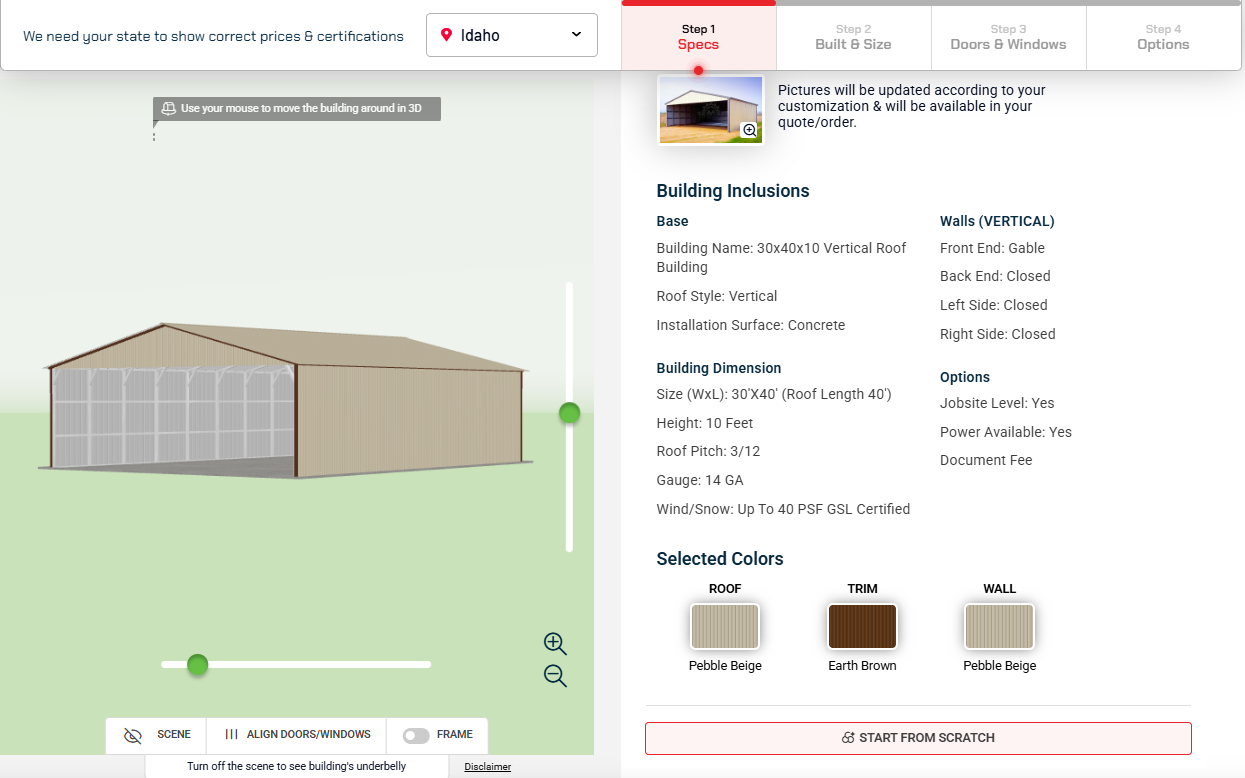
Our e-commerce platform is designed to guide you through the process step by step. First, you choose the type of building you need. From there, every option is user-friendly and clearly builds size, lean-tos, roof style, doors, windows, all with live pricing as you make changes. And when you’re done, the checkout is fast. No forms that ask for the same thing twice. No waiting around.You’ll also be able to follow your progress, from start to confirmation.
What stands out:
- The layout is clear, so you know exactly where to begin.
- Prices update instantly as you change features.
- The entire order process only takes a few minutes once you’re ready
Fully Customizable Metal Buildings
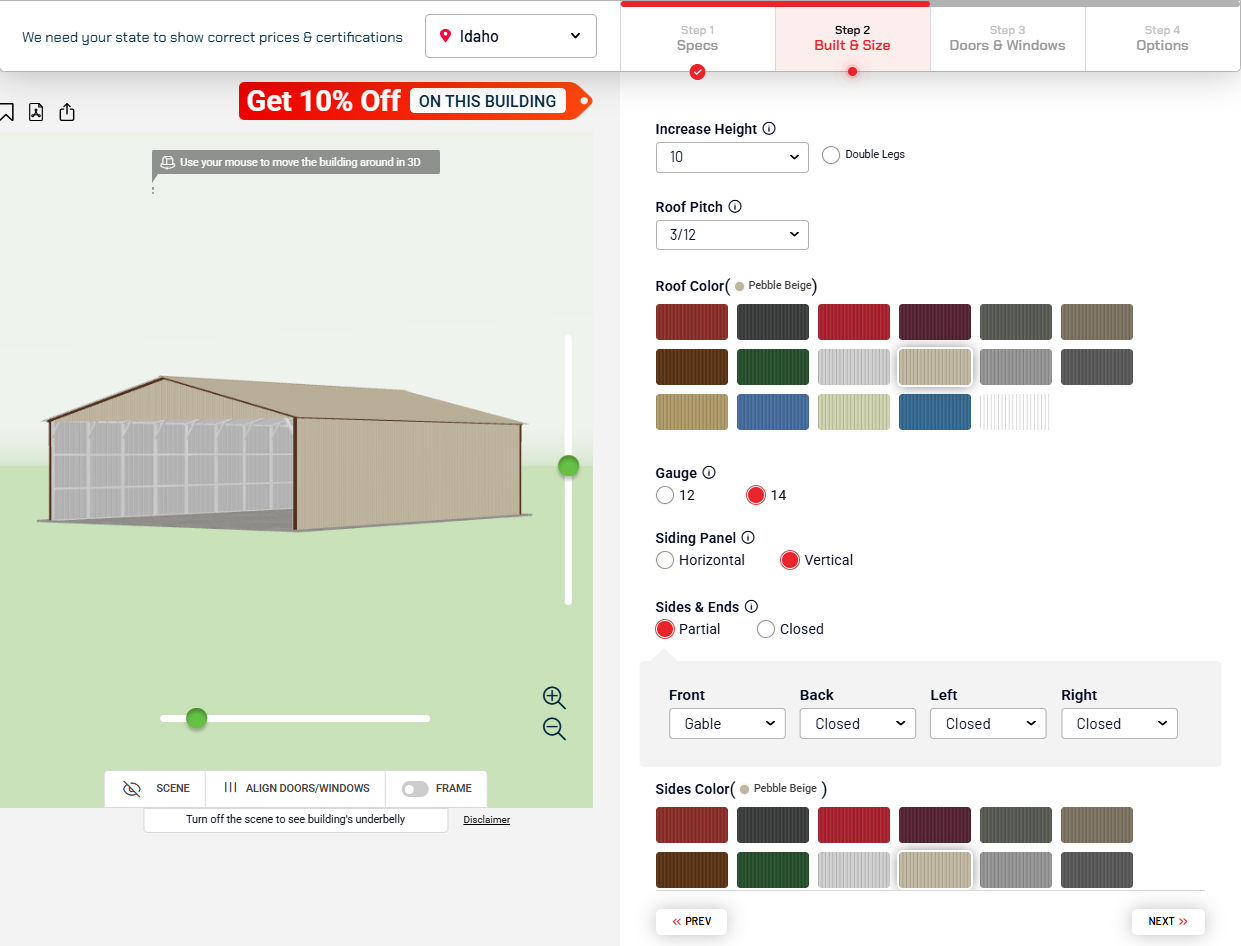
Ordering a metal building online isn’t just convenient; it lets you make it exactly how you want it. No sticking to a handful of pre-set models. No “close enough” designs. You can start small with a backyard shed or go big with a commercial building, and everything in between.
From the first click, you’re in control. Change the size. Pick your roof style. Add the number of doors and windows you need. Adjust the colors until they fit your property perfectly. As you make changes, you’ll see the updates instantly on your screen.
There’s also a 3D design tool built in. You can spin your building around, zoom in on the details, and get a clear picture of what it’ll look like before you place the order.
Want specifics? You can choose dimensions like 30×40 or 40×60, or type in your own measurements. Go vertical or regular on the roof. Match the roof, wall, and trim colors to your taste. Add the right openings, frame reinforcements, or both. And with the live 3D view, you’ll see your vision take shape right in front of you.
Certification & Insulation – Built for Where You Live
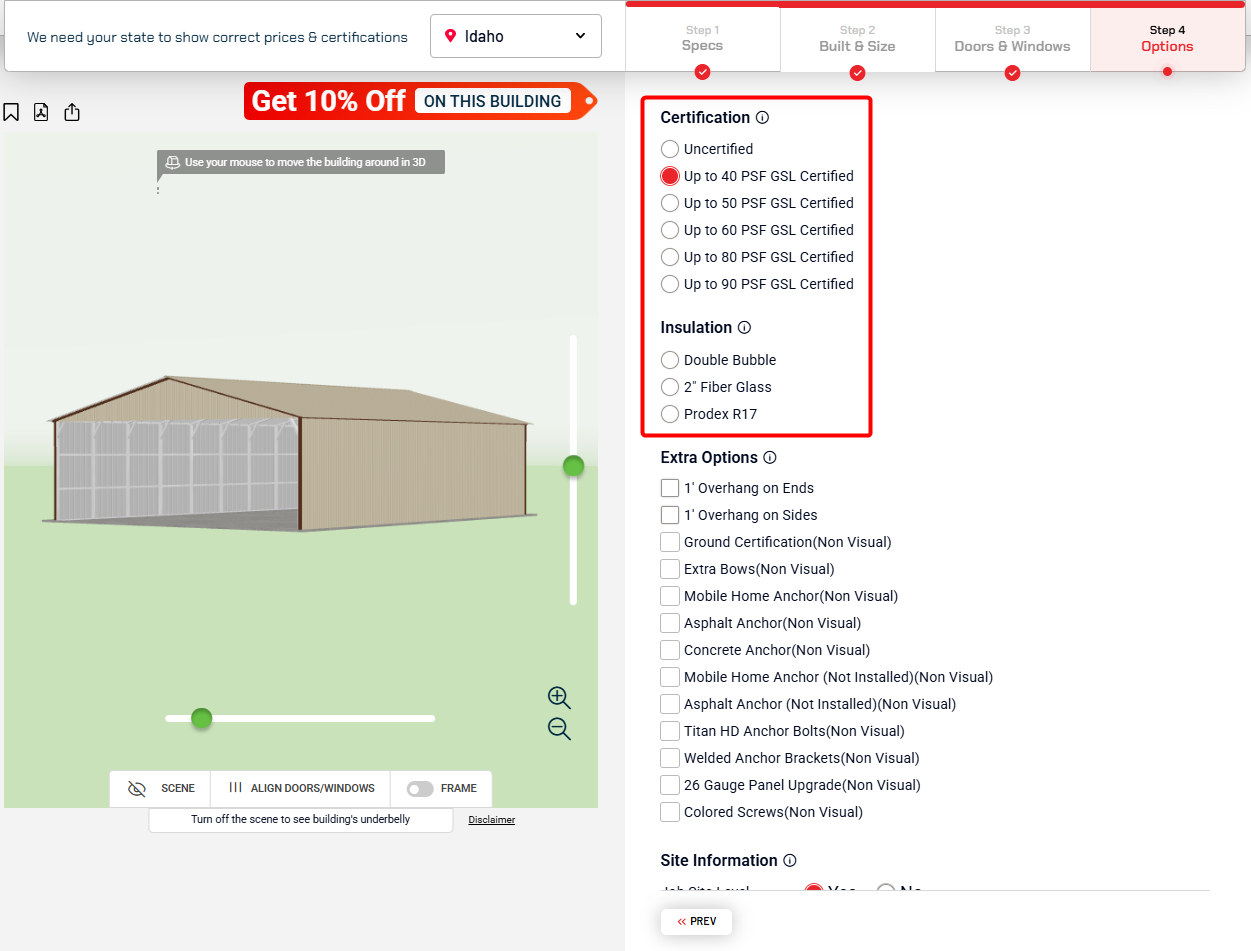
Metal buildings are built to last, but you can add more protection and comfort depending on how you plan to use the space.
You can order your building with a higher certification rating so it’s engineered to handle those tougher conditions. That rating isn’t just a number, it’s peace of mind that your structure is ready for what your climate throws at it.
Insulation is a smart upgrade if you will be working inside or storing sensitive items that are temperature-sensitive. It keeps summer heat out, brings warmth in during winter, and makes the building space more comfortable overall.
Upgrades include:
- Higher-rated certification — Up to 40 PSF or more, meeting strict building codes.
- Insulation options — Double Bubble for basic thermal control, 2-inch fiberglass for better coverage, or R17 Prodex for maximum efficiency.
Both options are easy to add during design. You’ll see exactly how they fit into your build before you finalize the order.
Transparent Pricing & Flexible Payment Options
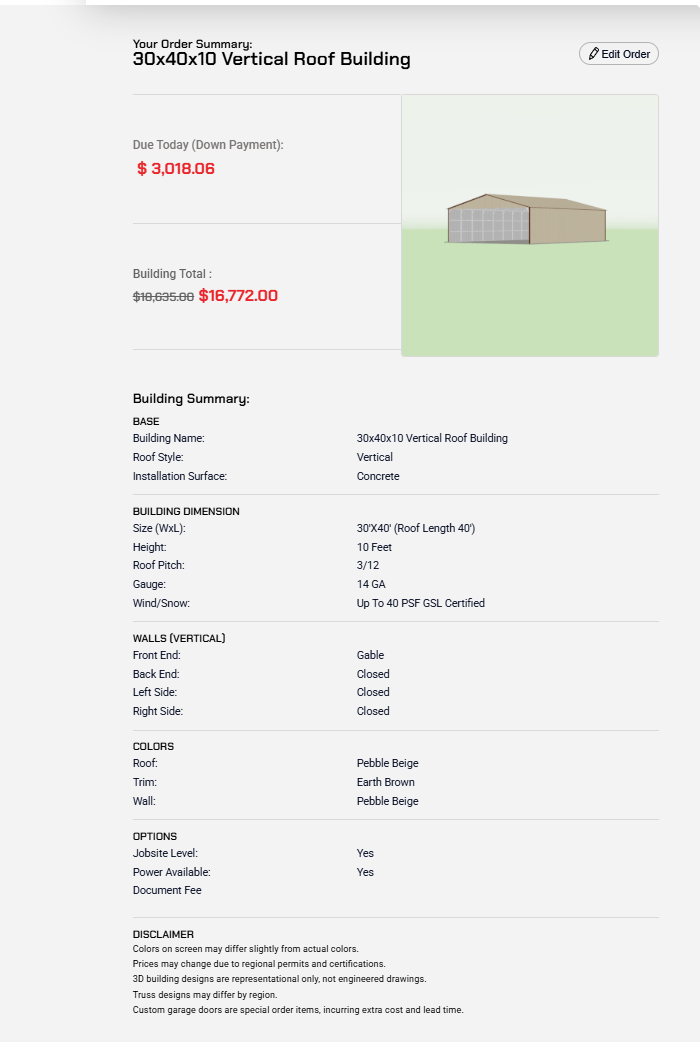
You’ll see the full cost of your building right away with no surprises later. This price covers the building itself, installation, and any extras you’ve chosen, like site preparation, color upgrades, or added structural features.
Paying is just as flexible. Put down a deposit or set up monthly financing. Choose what works best for your budget.
From time to time, seasonal discounted sales comes on site. On medium to larger structures, those discounts can really make a difference.
What you’ll notice:
- Clear breakdown – Every part of the order is itemized so you know exactly what you’re paying for.
- Different payment paths – Start with a deposit, or finance it over time.
- Discount opportunities – Watch for promotions, some going as high as 15% off.
The goal is simple: make buying your building straightforward from the very start.
Add-Ons to Make Your Building Work Better for You
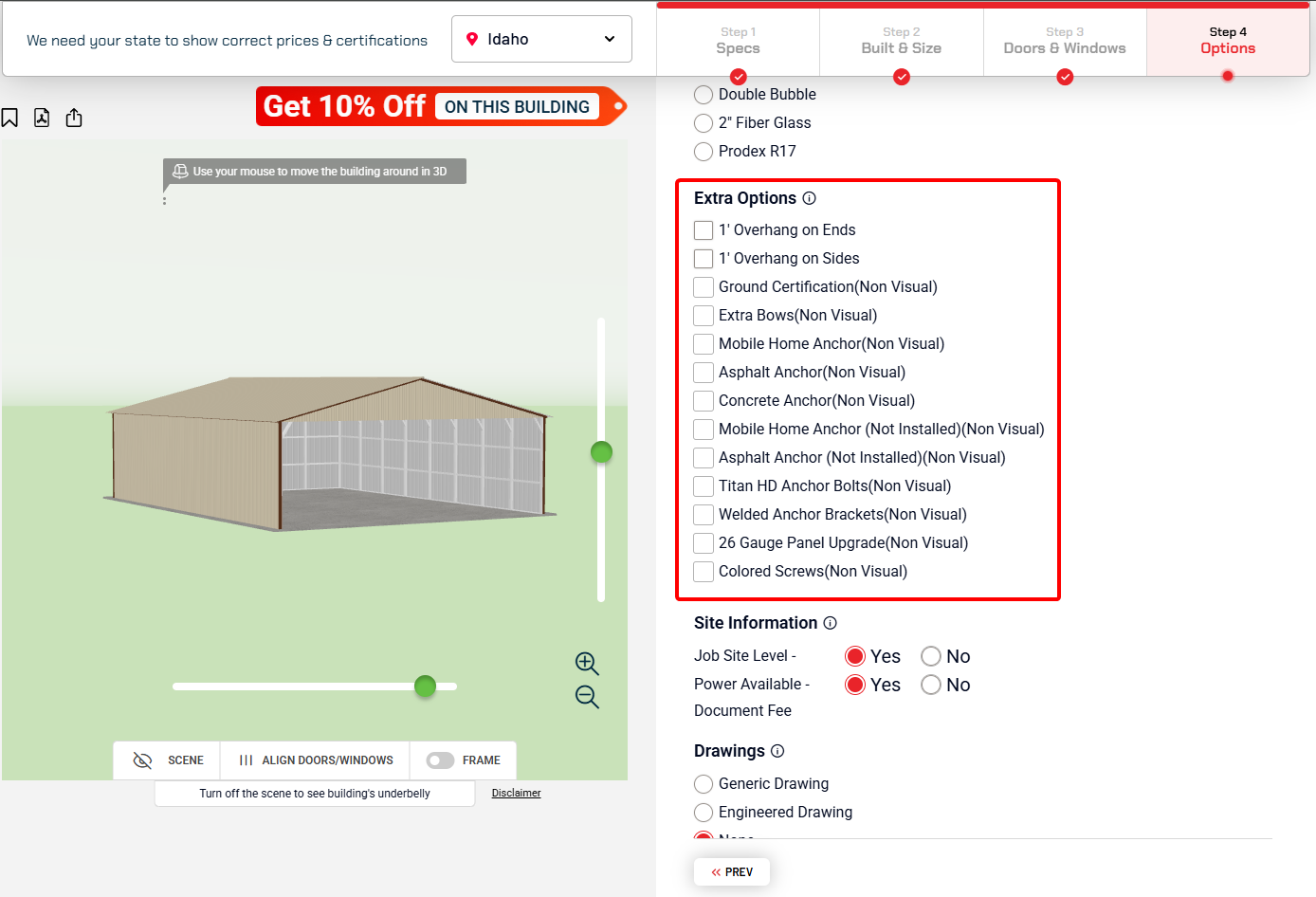
Every building starts with a solid base design. You can make upgrades that add strength, improve the design and looks, or extend its lifespan.
If you live in an area where winds hit hard, or you just want a durable setup, you can grab addons that include extra bows or mobile home anchors for added stability. Overhangs are another option - they provide additional coverage on the sides or ends and can alter the building's appearance.
You can also choose to add warranty coverage during checkout. That extra protection can help guard against rust-through or panel issues over time.
Some of the upgrades people often choose include:
- Extra structural support — Additional bows or anchors to reinforce the frame.
- Overhangs — Custom lengths on the sides or ends for more coverage and shade.
- Warranty coverage — Protection for rust and panel wear for longer peace of mind.
Not every project needs these, but in the right situations, they can be a smart addition.
Wrapping Up Your Order
Once your building design is set, the last step is quick. You’ll see a single page showing every choice you’ve made - size, roof style, colors, doors, windows, and any extras.
Take a moment to check it over. If it all looks good, click “Buy Now” and fill in the required details to lock in your order. Right after, you’ll get a confirmation of your order.
From design to checkout, it’s just a few clicks - and you’re done.
Here’s what you’ll get before you finish:
- Order summary – All the specs you picked, listed in one place for easy review.
- Confirmation details – Your delivery timeline and follow-up instructions so you know what to expect.
Visual Tools That Help You Decide
When you’re making a major purchase like this, seeing exactly what you’re getting matters. You want to be confident in your choices before committing — and the design tools make that possible.
You can view your building in 3D and spin it around to check every side. Change the colors. Swap features in or out. Zoom in to see the close details. The building images are sharp enough to show you the trim lines, roofing, and finishes clearly.
With these tools, you’re not guessing — you’re designing with your eyes open.
What’s available:
- 3D viewer – Rotate your design in real time while you build it.
- Detailed product images – See rooflines, trims, and doors up close before ordering.
- Live color selection – Switch colors instantly and preview the changes right away.
It’s the next best thing to standing in front of the finished building — without spending a dollar until you’re sure.
Customer Support & FAQ – Here When You Need Us
Questions happen. Sometimes it’s right at the start, before you’ve even picked a size. Other times it’s mid-checkout, when you want to double-check a detail.
You won’t be left figuring it out alone. We have an FAQ with straight, practical answers - from how to buy a metal building, how to tweak a design, to payment steps, what the lead time is, to what the installers will do on site. No long-winded explanations. Just what you need to know.
If you’d rather talk it through, use the live chat. You’ll be connected with someone who actually knows the process and can walk you through it without making you wait for an email reply.
Here’s what’s in place:
- Live chat – Quick connection to a support rep who can give you clear, direct help
- FAQ section – Plain answers on design options, payment methods, installation timelines, and more.
The help’s there. The moment you need it. So you can keep moving and get your building sorted without the guesswork.
Ready to Start?
Once you’ve had a look at the options, getting your design underway is straightforward. You can start right now, or step away and come back to it later — your progress will be waiting.
Everything is set up to keep the process simple. From customizing your building, to seeing the price update in real time, to checking out - it’s all built for flexibility.
Doesn’t matter if it’s a small backyard shed or a full-scale commercial build — the tools are ready when you are.
Click “Customize Your Building” and take the first step.

Frequently Asked Questions
No. The structural wind and snow load ratings of your building are determined by the engineering of the primary frame (columns, rafters) and the gauge of the panels themselves. While a vertical roof performs better in these conditions due to its drainage, the official engineered rating comes from the overall building design, not the panel orientation.
If you live in an area with heavy snowfall, frequent rain, or high winds, or if your building is longer than 31 feet, then yes, it is absolutely worth the investment. The added cost buys you significant peace of mind, reduced maintenance, and a much longer-lasting, leak-resistant structure.
On longer slopes, horizontal roofs require multiple panel segments joined end-to-end. Each of these horizontal seams is a potential leak point. Beyond approximately 31 feet, the number of seams and the risk of water infiltration become unacceptably high.
A Vertical Roof is unequivocally the best. The uninterrupted vertical channels prevent water and snow from backing up at horizontal seams, directing it off the roof quickly and efficiently.


